
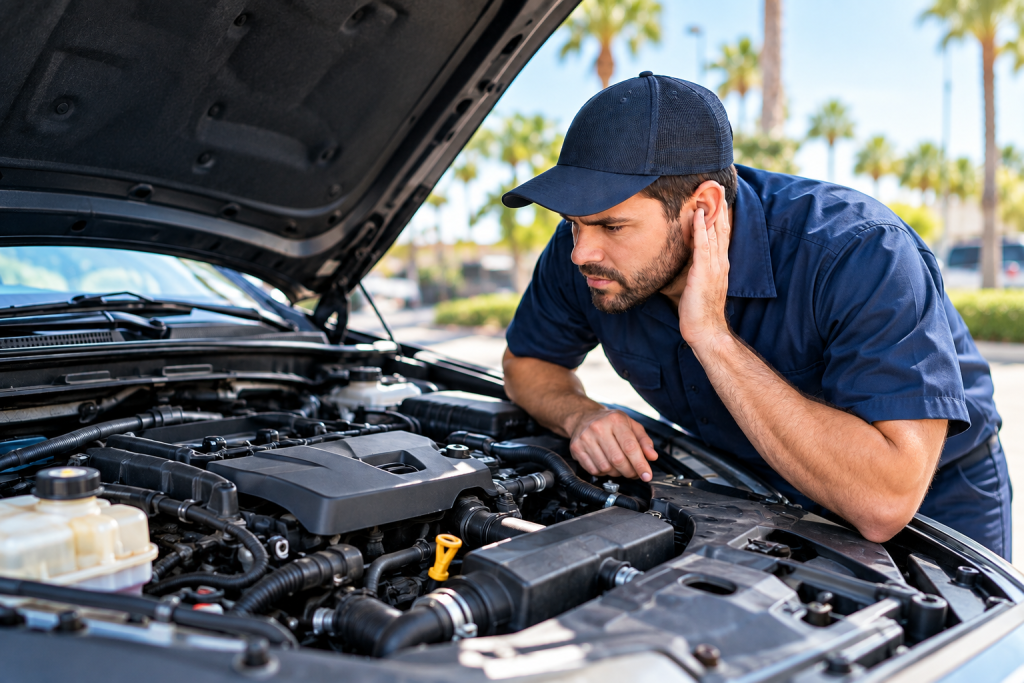
Your car breathes just like you do. Every mile you drive, the engine pulls in thousands of gallons of air, and the cabin ventilation system pushes air into the space where you sit. Two filters clean that air, and both wear out faster than most drivers realize. If you live in Bakersfield, where dry weather, farm dust, and wind carry fine particles across the valley, your filters work harder than they would in many other places. This DIY guide explains how to check your air filters, how to tell when they need to be replaced, and how to handle air filter replacement in Bakersfield dust conditions.
Engine Air Filter vs Cabin Air Filter
Your car has two air filters, and each does a different job.
The engine air filter cleans the air that goes into the engine. Combustion needs a steady supply of clean air mixed with fuel. If dirt enters the engine, it can wear internal parts and disturb sensors. A clean engine air filter helps the engine run smoothly, respond well, and use fuel efficiently.
The cabin air filter cleans the air that flows through your heating and air conditioning vents. It traps dust, pollen, and other particles before they reach you and your passengers. A clogged cabin filter can weaken airflow, cause odors, and make the air conditioning work harder.
Neither filter is expensive, and both are often easy to reach, which is why checking them is a popular DIY job.
Why Dusty Conditions Matter
Air filters work by trapping particles in a fibrous material. In clean conditions, a filter may last a long time. In dusty conditions, it fills up much faster. Dust from farmland, construction, dirt roads, and dry windy days all end up in your filter. Once the material is packed with debris, air struggles to pass through, and the filter becomes less effective. We cover how local conditions affect filters in our article on Central Valley heat and dust and protecting your car’s air filters. If you often drive on unpaved roads or through agricultural areas, plan to inspect your filters more often than the minimum schedule in your owner’s manual.
Signs Your Engine Air Filter Needs Attention
- Reduced fuel economy, since a restricted filter makes the engine work harder
- Sluggish acceleration or a feeling that the car has lost power
- A rough idle or occasional misfire
- A check engine light, in some cases
- A filter that looks dark, clogged, or full of debris when held up to light
- Unusual engine sounds or black smoke from the exhaust in severe cases
These symptoms can also come from other problems, such as worn spark plugs or a failing sensor, so the filter is just one thing to check. If your car is hard to start or will not start, our guide to the top 10 reasons your car won’t start and how to get back on the road covers the usual causes.
Signs Your Cabin Air Filter Needs Attention
- Weak airflow from the vents, even at a high fan setting
- A musty or stale smell when you turn on the heat or air conditioning
- More dust than usual on the dashboard
- Increased allergy symptoms while driving
- Foggy windows that take longer to clear
- A filter that looks gray, black, or filled with leaves and debris
How to Check Your Engine Air Filter
Checking the filter takes only a few minutes. Start with a cool engine and your owner’s manual, since the layout varies by vehicle.
- Park on a level surface and turn off the engine
- Open the hood and find the air filter housing, a black plastic box near the engine with a large hose attached
- Release the clips or remove the screws that hold the cover closed
- Lift out the filter, taking care not to shake dirt into the intake
- Hold it up to a bright light or a flashlight
If you can see light passing through the pleats, the filter may still be usable. If the pleats are packed with dirt, covered in oil, or damaged, replace it. Do not try to clean a paper filter by tapping it or blowing air through it, since that can push dirt deeper or tear the material.
How to Replace Your Engine Air Filter
If the filter needs replacing, get the correct part for your vehicle’s year, make, model, and engine size. Then follow these general steps:
- Before installing the new filter, wipe out the inside of the housing with a clean cloth so no loose debris falls toward the engine
- Place the new filter in the housing with the correct side facing up, matching the way the old one sat
- Make sure the rubber seal sits flat and fits snugly all the way around
- Close the cover and secure every clip or screw
- Check that any hoses or sensors you moved are reconnected
A filter that does not seal properly lets unfiltered air into the engine, which defeats the purpose of replacing it. If anything looks unclear, stop and check the manual or ask a professional.
How to Check and Replace Your Cabin Air Filter
The cabin filter location depends on the car. In many vehicles, it sits behind the glove box. In others, it is under the hood near the base of the windshield or under the dashboard. Your owner’s manual shows the location and the steps to reach it.
For a glove box setup, you usually empty the glove box, release the stops that let it swing down, and slide out the filter tray. Pay attention to the arrow printed on the filter that shows the direction of airflow, and install the new one the same way. Close everything back up, then run the fan to confirm air flows freely and the smell is gone.
How Often Should You Replace Air Filters?
Manufacturers often suggest replacing the engine air filter somewhere around every 15,000 to 30,000 miles, and the cabin filter around once a year or every 15,000 to 25,000 miles, but your manual gives the exact interval for your vehicle. Dust and heavy use shorten those intervals. In Bakersfield, a good habit is to look at both filters at every oil change and replace them as soon as they look dirty, even if the mileage has not been reached.
Common Mistakes to Avoid
- Installing the wrong size or type of filter
- Putting the filter in upside down or facing the wrong direction
- Leaving the housing dirty before installing the new filter
- Failing to close all the clips, which lets dust bypass the filter
- Cleaning and reusing a disposable filter that should be replaced
- Ignoring the cabin filter because it is out of sight
When to Call a Professional
Many drivers handle filter replacement themselves, but some vehicles hide the filter behind panels or require special tools. If you are not comfortable working under the hood, or if you replaced the filter and the symptoms continue, it makes sense to get help. A technician can also look for related problems, such as a dirty mass airflow sensor, worn spark plugs, or other issues that cause similar symptoms.
A mobile mechanic can inspect and replace both air filters at your home or workplace, usually during a short visit, without you having to go to a shop. They can also combine the job with an oil change or other routine maintenance. Some work may need a shop, and a trustworthy technician will tell you honestly when that is the case.
Keep Your Car Breathing Easy
Air filters are one of the cheapest and easiest parts of your car to maintain, and they make a real difference to performance, fuel economy, and the air you breathe. Check them regularly, replace them when they are dirty, and do not wait for symptoms to appear.
To learn more about our services, visit our homepage. If you would rather have a professional handle the job, reach out through our contact us page and we will come to you anywhere in the Bakersfield area.